Yes, PSLE Maths has become harder to score well in, even though the syllabus itself has not grown. The papers now lean on multi-step reasoning and unfamiliar problem framings rather than practised procedures, so a child who only drills past-year sums gets caught out. The children who cope are the ones who understand why each method works and can adapt it to a question they have never seen.
Key Takeaways
- ✓PSLE Math has not added harder topics. The shift is in how questions are asked, with more multi-step problems set in unfamiliar real-world contexts.
- ✓MOE caps difficult questions at 15% of the paper (15 marks), but those 15 marks now require significantly more reasoning than they did a decade ago.
- ✓The 2021 switch to Achievement Levels removed the bell curve. A student's grade now depends purely on raw marks, which makes each challenging question feel higher-stakes.
- ✓Parents' frustration is valid, but the solution is not drilling more practice papers. Students need exposure to novel problems they have never seen before.
- ✓At MathArchery, we specifically train students to handle unfamiliar question structures, not just repeat familiar ones.
Every year after PSLE, parents message me saying the paper was brutal. After eight years of coaching primary school students through this exam, my answer is always the same: the topics have not changed much, but the thinking required to answer them has. MOE designs PSLE Math so that most students can access the bulk of the paper. Roughly 85% of questions sit at accessible to moderate difficulty. The other 15% are deliberately constructed to test whether a child can apply what they know in a context they have never encountered before. That gap between what students practise and what the paper actually asks is where most marks get lost.
What Has Actually Changed
The PSLE Math syllabus was last meaningfully updated in 2021, starting with Primary 1 students. From 2026, Primary 6 students are the first cohort to sit the full PSLE under the revised curriculum. The biggest structural change is not the topic list. It is the emphasis.
MOE shifted from testing whether students can compute to testing whether they can reason. Speed as a topic moved to Secondary 1. Average and Ratio shifted to Primary 6. What replaced the freed-up curriculum space was not new content but deeper work on mathematical thinking: metacognition, cross-topic connections, and applying concepts to contexts students have not explicitly rehearsed.
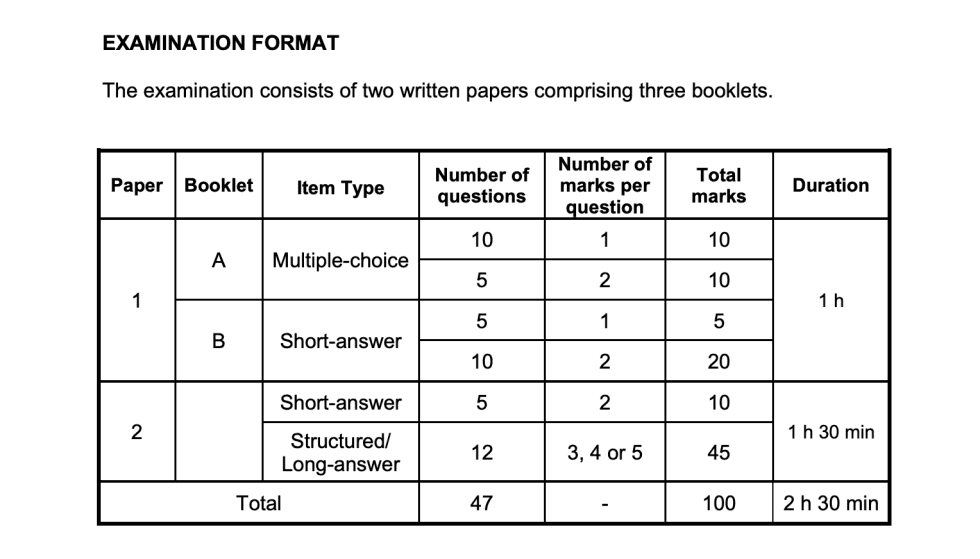
The exam format also changed. Paper 1 now accounts for 50% of total marks, covering multiple-choice and short-answer questions. Paper 2 carries the remaining 50% and is where the multi-step problems live. Students who can handle Paper 1 cleanly but freeze on Paper 2 structured questions are the ones who feel the paper was "impossible," even if they walked out of Paper 1 feeling fine. You can read more about how the syllabus evolved in our piece on key changes after 2021 updates.
MOE Paper Structure
PSLE Math Paper: How the Marks Break Down
50%
Paper 1
MCQ + Short Answer
50%
Paper 2
Structured / Long Answer
~85%
Accessible Questions
Straightforward to moderate
15%
Challenging Questions
Novel, multi-step problems
The Question Types That Catch Students Out
When parents say the paper is harder, they are usually describing one of three specific question patterns that come up in Paper 2.
1. Multi-Step Problems with a Hidden Structure
These questions give students more information than they need and require them to figure out the right sequence of operations before computing anything. The 2021 paper had a coin problem involving 50-cent and 20-cent coins. Students had to determine who had more coins and then calculate a total mass using a weight difference. That is three separate reasoning steps before a single calculation. Students who had only practised straightforward coin problems froze.
The 2024 paper included ticket pricing optimisation questions where students had to find the minimum cost by testing multiple package combinations. No formula covers that. You have to work through the logic systematically.
2. Unfamiliar Contexts for Familiar Concepts
Fractions, ratios, and percentages are not new. But PSLE regularly wraps them in scenarios students have never rehearsed: proportional spending between two people with unequal amounts, or folded paper geometry that requires understanding physical properties before applying area formulas. Students who have only drilled formula application get stuck at the reading-comprehension stage. They do not recognise which concept the question is testing.
3. Number Properties and Factor Reasoning
Questions asking students to identify numbers with specific factor requirements and sum constraints have appeared more frequently in recent papers. These require systematic thinking (listing, testing, eliminating) rather than a procedure. They take time, and students who spend too long on one of these can run out of time for the rest of Paper 2.
📝 What MOE says
According to MOE, questions "are carefully designed to be accessible to most students" and the challenging portion is capped at 15 marks. The paper is also marked flexibly. Students receive credit when they apply mathematical concepts correctly through their working, even if the final answer is wrong. Method marks matter.
Why the Difficulty Feels Higher Than It Is
Part of the issue is the 2021 change to Achievement Levels. Before 2021, PSLE scores were norm-referenced. A student's T-score reflected their position relative to the cohort. Under AL, grades are absolute. Every mark a student drops maps directly to a grade boundary, with no bell curve to smooth things out.
That changes the psychology of the exam. A student who got 72 marks in the old system might have landed comfortably in the middle. Under AL, 72 maps to AL4. The paper may not have gotten objectively harder, but the stakes attached to each question feel different now.
There is also a selection effect at work. Parents compare notes after the exam. One difficult question that circulates on parent chat groups can colour the perception of the whole paper, even if most of it was manageable. After the 2024 paper, most students reported it was "relatively manageable," but commentary focused on the handful of questions with unusual phrasing.
Is It Fair? A Balanced View
Parents sometimes push back on the challenging 15%: why test primary school children on problems that require this level of reasoning? The honest answer is that PSLE Math has two jobs. The first is to confirm that students have mastered primary school mathematics. The second is to differentiate students for secondary school placement. The difficult questions exist to do the second job. Remove them and there is no way to separate AL1 students from AL2 students.
Associate Professor Jason Tan from the National Institute of Education put it clearly: removing such questions would mean "the top scorers [are] not separated from the middle of the pack." The sorting function is intentional. You can read more about the reasoning behind these question types in our piece on navigating the evolving PSLE Maths syllabus.
That does not mean it is easy to watch your child struggle. But the preparation strategy that follows from this is different from just drilling more practice papers.
👩👧 For Parents
Approximately 50% of students achieve AL4 or better (75+ marks), according to MOE, which means most students are finding the paper manageable. If your child is scoring well on practice papers but dropping marks on the harder questions, the gap is almost always in reasoning flexibility, not content knowledge.
What This Means for How Students Should Prepare
More practice papers alone do not close the gap between AL3 and AL1. Students who score high on past papers but underperform on the actual exam are usually missing one of two things.
- →Exposure to novel problems. PSLE does not repeat questions. Students need regular practice with problems they have never seen before. Questions where the first step is figuring out what type of problem this is, not executing a memorised procedure.
- →Systematic working habits. The harder PSLE questions give method marks. A student who writes clear, logical steps can recover marks even with a wrong final answer. Students who jump straight to computation and guess when stuck leave those marks on the table.
- →Time management under pressure. Spending eight minutes on a four-mark number-properties question is not worth it if it means rushing a six-mark structured problem. Students need to practise making that call in real time.
- →Reading the question properly. A significant number of errors on harder questions come from misreading constraints: overlooking "minimum cost" versus "total cost," or missing that a folded paper retains the same dimensions. Slow, careful reading of the question is a skill that has to be trained.
Research on what actually improves PSLE Math performance points in the same direction: metacognitive awareness and deliberate exposure to non-routine problems, not volume of practice alone. Our breakdown of that research is in this piece on recent findings.
How We Approach This at MathArchery
At MathArchery in Bukit Timah, we build lessons around exactly the question types that separate AL2 from AL1. That means exposing students to unfamiliar problem structures from Primary 5 onwards, not cramming them in the last month before PSLE.
We work through the logic of multi-step problems by asking students to identify what the question is really asking before they touch a pencil. We practise written working deliberately, so method marks are never left uncollected. And we time practice sections so students develop a feel for when to push through and when to move on.
The students who surprise themselves on PSLE day are not the ones who did the most papers. They are the ones who stopped treating every unfamiliar question as a signal that something was wrong.
💡 Practical next step
Pull out one past PSLE Paper 2 and work through only the 4- and 5-mark questions. For each one, before writing anything, ask your child: what type of problem is this? What information do I have? What am I being asked to find? That three-question habit is the foundation for handling the hardest 15% of the paper.
The Bottom Line
PSLE Math papers feel harder because the questions expect children to think rather than just compute. The topics are not new. The demand to apply them in unfamiliar ways is. That shift rewards preparation that goes beyond drilling. It rewards students who have practised reasoning through problems they have not seen before.
If you want to understand what preparation looks like in practice, reach out to us. We are happy to walk through where your child currently stands and what would help most.
Sources & References
- [1] MOE Singapore. Is the PSLE Mathematics paper so difficult? (EdTalks)
- [2] National Institute of Education, NTU Singapore. The reason why some PSLE maths problems are so tough (Assoc Prof Jason Tan)
- [3] Data.gov.sg. Percentage of PSLE Students who Scored AL 1–6 in Standard Mathematics (2021–2024)
- [4] The Independent Singapore. Parents upset over tough math questions on PSLE, tears shed (2021)
- [5] Think Academy Singapore. Solving the 7 Toughest 2024 PSLE Math Questions: A Step-By-Step Guide
- [6] A-Grader Education. Changes in the PSLE Math Syllabus (2021 curriculum update)